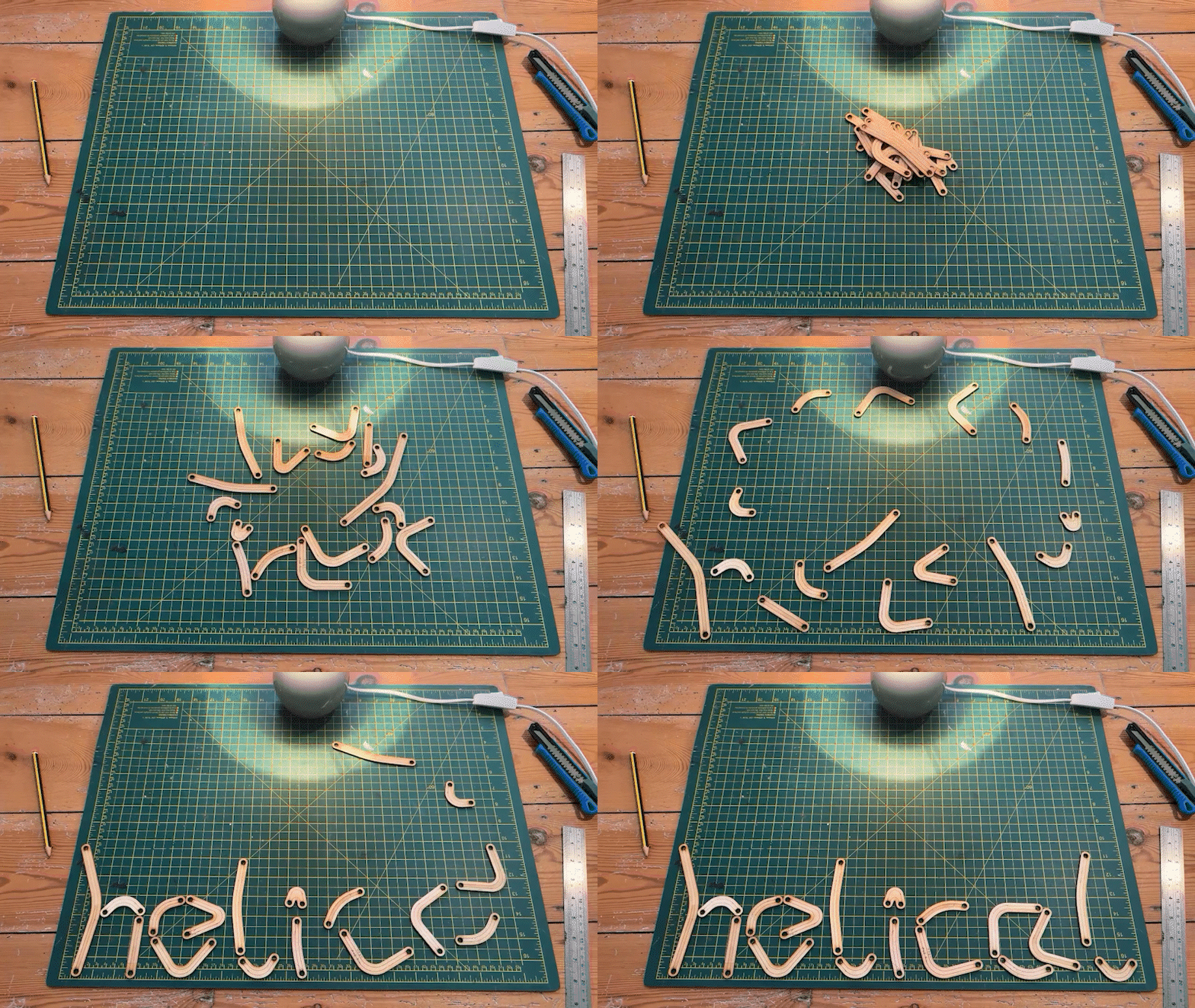
Helical Homeware
[work in progress]
interactive design roadmap
Helical Homeware is an open-source furniture system where standardised components transform endlessly. A chair becomes a table. A cupboard becomes a kitchen counter.
Unlike modular systems that simply rearrange complete units like stacking cubes, Helical works at the part level, opening up an expanse of uses from a relatively small set of components and drastically lowering the cost of material transformation.
We provide a web-based design platform built on what we call "flexible modularity" – instructions for a universal component kit where parts recombine into entirely different furniture types as your needs change.
The problem: furniture is a material dead-end
Current furniture is engineered in isolation, designed for rigidity and haste. This creates overbuilt structures with single points of failure. When one joint breaks or your needs change, the entire object becomes useless. The siloed design process wastes massive amounts of material and energy before products even reach your home.
Traditional recycling doesn't solve this. Shredding or melting releases the embedded energy and labour that gave materials their value. For example, using a tree as a structural beam captures far more of its potential than immediately pulping it for paper. The principle applies to furniture: materials should cascade through uses, maintaining their form and value for as long as possible, rather than being thrown off an energy cliff. By maintaining part integrity, we follow the path of least resistance.
Beyond waste, there's uncertainty. We don't always know what we want. Besides, not everyone wants to think about furniture as much as we do :-) Helical lets you iterate through this uncertainty fluidly and cheaply, exploring different configurations rather than committing to fixed forms that quickly become obsolete.
Existing attempts at modularity rarely solve this. Parts are often too rigid to design around; there are only so many ways to stack blocks, and cubes can't easily become a comfortable seat. More to the point, they're plain boring to work with and care for. If people are going to repair and tend to furniture, parts must invite play, care and even misuse. Design is evolutionary: that's how improvements are found. Happy accidents, salvaging and hacking.
Fabrication without friction
Parts designed with margin for transformation, not disposal.
The kit: We emphasise adapters and connections that expand what's possible as new parts join the system. Parts are designed with margin for transformation, not disposal: that extra material helps components survive reconfiguration into new uses. The system adapts to available materials, balancing durability, longevity, and local availability.
The platform: A web-based design tool where you can see how parts fit together and come apart. The software tests designs against real physical constraints and automatically generates transformation instructions, so reconfiguring a bookshelf into a desk isn't guesswork, it's guided.
The community: This is crowdsourced circular furniture, inspired by projects like Wikipedia. Anyone can contribute parts, share designs, and build upon the system. If something breaks, someone nearby can often provide a cheap repair, as parts are entirely open and standardised. As more people participate, the kit grows smarter and more capable.
Who it's for
Renters and small businesses in cities like London who move frequently and whose needs evolve rapidly. People starting families, moving in together and merging possessions, or working where they live. Anyone whose life changes faster than their purchasing cycles allow. A kit that flatpacks for the next place is furniture worth keeping.
Helical ensures that as your life changes, your furniture evolves with you.
The future: a furniture bank, not a landfill
We're building the foundation for local maker networks, a distributed "furniture bank" where you can fabricate components on demand or return parts to be reclaimed and remade into something new. This brings high-value design and skilled craft back to local communities, creating jobs and resource resilience.
As AI and robotics integrate into fabrication, the human role shifts from manual assembly to creative stewardship. You define what you need; smart infrastructure manages the complexity of making it real.